Advisory services

    Know what your contracts commit you to, before the vendor tells you.

    Your agreements get read the way the vendor's team reads them: line by line, in the order they were signed, with the amendments that override them. What comes back is a position you can act on, not a list of extracted dates.

    • NDA signed before anything is shared
    • Fixed fee agreed up front, never hourly
    • A written brief you own outright
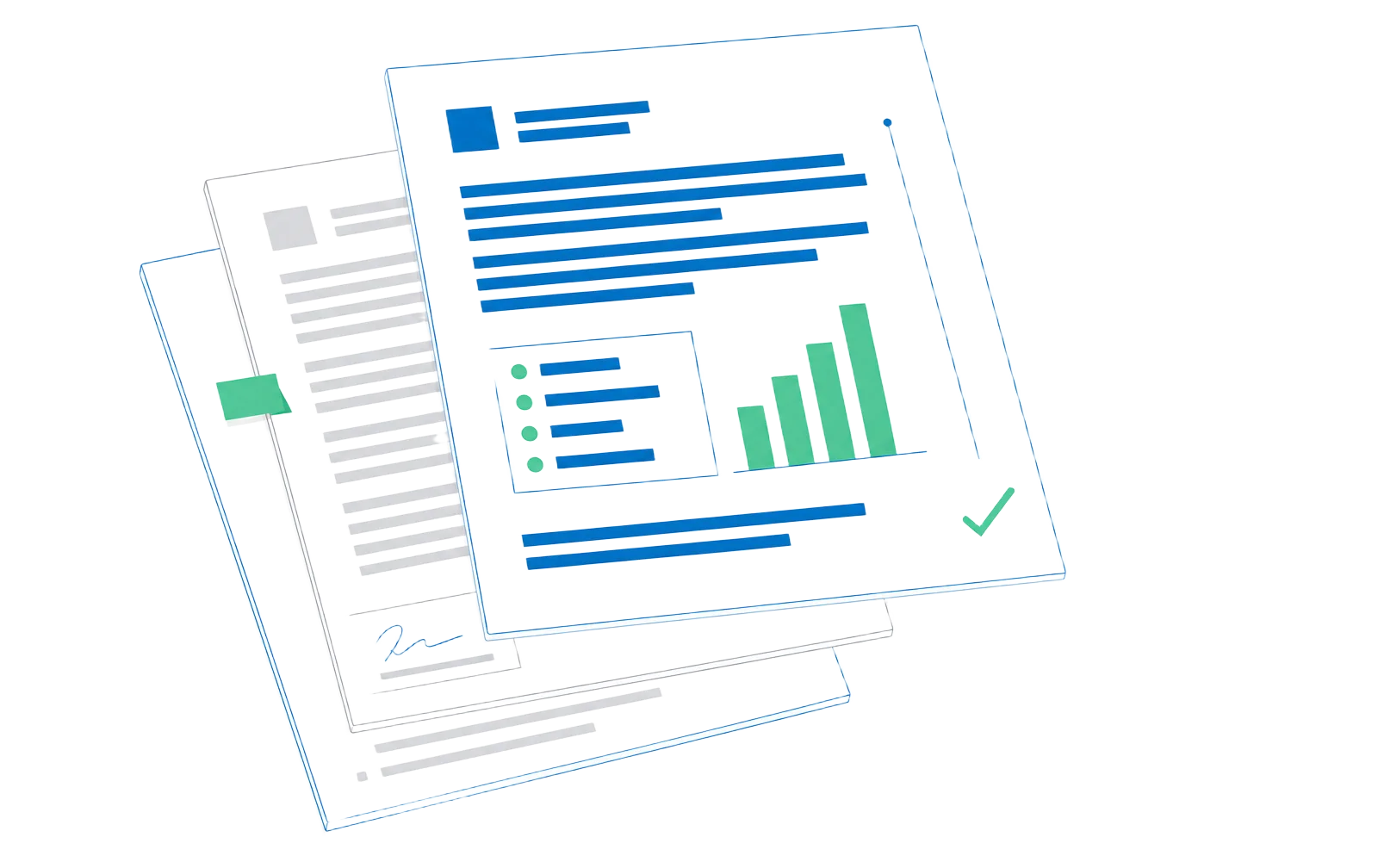
    Illustration of a printed renewal intelligence brief: redacted findings, a ranked action list, a rising price trajectory chart, and a signed contract underneath
    Renewal intelligence brief. A written position on your renewals: deadlines, exposure and leverage, with the reasoning behind each call.
    0%

    of the paper read: master agreement, order forms, amendments, side letters

    0

    business days from kickoff to a written position in your hands

    0

    software commitment required to run any engagement

    Five ways to work together

    From a single contract to owning the whole calendar.

    Start with one assessment. Move up when the renewals keep coming. Every engagement is scoped and priced before it starts.

    EngagementTypeBest momentScopeFrom
    Renewal Readiness AuditOne-off assessmentDelivered in 5 business days10 to 40 vendors$1,500
    Pre-Renewal Strategy BriefOne-off assessmentBest used 90 to 120 days before deadlinePer vendor$900
    Negotiation SupportDone-with-youRuns alongside your renewal cyclePer negotiationFrom $2,500
    M&A Contract Exposure ReviewOne-off assessmentDelivered in 5 to 10 business daysDeal portfolio$5,000
    Renewal DeskOngoing retainerMonthly, cancel with 30 days noticeFull portfolioFrom $1,900 per month

    Renewal Readiness Audit

    One-off assessment

    Best when: You cannot say, with the contracts in front of you, what your company is committed to over the next six months.

    Every agreement in your portfolio gets read: master agreement, order forms, amendments, and the side letters that quietly override them. What comes back is not a list of extracted dates. It is a ranked view of where you are actually exposed, which deadlines are still recoverable, and which vendor conversations need to start this month.

    What you get

    • Renewal timeline reconstructed from the signed paper, not the invoice history
    • Notice deadlines ranked by whether you can still act on them
    • Escalation and uplift clauses read in the context of what you already pay
    • Termination and exit rights assessed for whether they are practically usable
    • A prioritised action list, with the reasoning behind each call

    Pre-Renewal Strategy Brief

    One-off assessment

    Best when: One renewal matters more than the others and it is 90 to 120 days out.

    The vendor's account team started preparing for this renewal months ago, with a quota, a playbook, and a view of your alternatives. This brief closes that gap: where your leverage genuinely sits, which of your options the vendor will resist hardest, and what a realistic outcome looks like before anyone quotes a number.

    What you get

    • Leverage assessment: what you hold, what you only appear to hold
    • Your pricing structure read against how this vendor typically packages
    • Scenarios costed out: renew, renegotiate, right-size, or exit
    • The concessions worth trading, and the ones to refuse outright
    • An opening position, a target, and a defined walk-away point

    Negotiation Support

    Done-with-you

    Best when: You have the strategy and you want someone experienced in the room with you while it plays out.

    Your team runs the negotiation. You are not left to interpret the vendor's moves alone. Positioning is set before the first call, counter-language is drafted for the responses you are likely to get, and every round is debriefed while the next one is still open. When paper comes back, it gets read before you sign.

    What you get

    • Pre-call positioning and message framing for each stakeholder
    • Drafted counter-language for the vendor's standard objections
    • Live debrief after each round, with the next move decided together
    • Redline review of returned paper before signature
    • Escalation guidance when the account team stops moving

    M&A Contract Exposure Review

    One-off assessment

    Best when: You are acquiring or being acquired, and the target's software contracts have not been read commercially.

    SaaS agreements carry deal risk that legal diligence routinely misses because it is commercial, not legal: change-of-control triggers, assignment restrictions that block integration on day one, and multi-year escalators that inflate the run-rate you are underwriting. All of it surfaced before close, quantified against the deal timeline.

    What you get

    • Change-of-control and assignment clauses across the target portfolio
    • Integration blockers identified against your day-one plan
    • Auto-renewal exposure mapped to the expected close date
    • Multi-year escalation modelled into the forward cost base
    • An EBITDA impact summary written for the deal team

    Renewal Desk

    Ongoing retainer

    Best when: Renewals arrive continuously and nobody in the company owns the calendar.

    The function a procurement team would give you, without the headcount. The renewal calendar becomes someone's job. Vendors that matter get a brief before their window opens rather than after, and when an account team makes an unexpected move you have someone to call the same day.

    What you get

    • Rolling renewal calendar, owned and kept current
    • Pre-renewal brief ahead of every material vendor window
    • Same-week judgment call when a vendor changes terms or pricing
    • Quarterly portfolio review with the finance owner
    • New agreements reviewed commercially before they are signed

    Prices are the starting point for the scope shown and are confirmed in writing before any work begins. Nothing is billed hourly.

    How the work is done

    Extraction is the input. Judgment is the product.

    Pulling dates and clauses out of a contract is the easy part, and it is where most tooling stops. What follows is the part that changes the outcome of a negotiation.

    Stage 01

    Read the paper, all of it

    Master agreement, every order form, every amendment, and the side letters that quietly override the terms above them. Contracts contradict each other more often than people expect, and that is usually where the exposure is sitting.

    Software gives you
    Returns the dates and values it can find in each document.
    This review gives you
    Works out which document actually governs when two of them disagree.
    Stage 02

    Reconstruct the commercial history

    What was agreed originally, what changed at each renewal, and what the trajectory says about the vendor's intent. A 7% uplift means something different on a contract that was already discounted 40% than on one that was never negotiated.

    Software gives you
    Reports the current price and the stated escalator.
    This review gives you
    Reads the pattern across renewals and names what the vendor will ask for next.
    Stage 03

    Locate the real leverage

    Timing, credible alternatives, switching cost, and which parts of the agreement the vendor's account team cares about more than you do. Most buyers overestimate the leverage they hold and miss the leverage they actually have.

    Software gives you
    Cannot see your alternatives, your politics, or the vendor's quota pressure.
    This review gives you
    Weighs all three and tells you which threat is credible and which is bluff.
    Stage 04

    Write the recommendation

    Not a risk register handed back for you to interpret. A position: what to do, what to trade, what to refuse, and where to stop. Written so it can be forwarded to a CFO without translation.

    Software gives you
    Produces a list of findings.
    This review gives you
    Makes the call, states the trade-offs, and stands behind it.

    The frameworks behind this are published, not hidden. Read the negotiation playbook, the renewal timeline, or the preparation checklist.

    The deliverable

    Judge the output before you pay for it.

    A redacted page from a real brief. Vendor details are removed, the structure and the depth are not.

    Renewal Intelligence brief

    Vendor 04 (collaboration suite)

    Page 3 of 11

    Notice window

    Closes in 34 days

    Proposed uplift

    +9.4% on renewal

    Exit rights

    Present, not usable

    Finding

    The order form states a 60 day notice period. Amendment 2, signed 19 months later, extends it to 90 days without restating the original clause. The date tracked internally is based on the order form and is already wrong by 30 days.

    Price trajectory across renewals

    Initial term
    Renewal 1
    Renewal 2
    Proposed

    Recommended position

    Serve notice this week to preserve optionality, then reopen. Anchor on flat renewal against a 21% reduction in unused seats. Concede a 24 month term only if the uplift cap moves to CPI. Walk-away point and fallback language are set out on page 7.

    What you receive

    • 8 to 14 pages per assessment, written in plain commercial language
    • One page per material vendor, plus a portfolio summary for the CFO
    • Every finding cited back to the clause and document it came from
    • PDF you own outright, with no platform login required to read it

    The brief is written to be forwarded. Finance teams take it into budget conversations and IT teams take it into vendor calls without anyone having to rewrite it first.

    What reviews keep surfacing

    The same six problems, in portfolio after portfolio.

    Anonymised patterns from real assessments. No client names, no invented savings figures, just what tends to be sitting in the paper.

    01

    The notice date in the tracker is not the notice date in the contract

    It usually comes from the original order form, while a later amendment quietly extended the period. The gap is typically 30 days and it is discovered too late.

    02

    Auto-renewal with an exit right nobody can practically use

    Termination for convenience exists, but only in a window that opened before the internal approval cycle could realistically complete. The clause reads as protection and functions as a lock-in.

    03

    Uplift caps that cap the wrong thing

    The cap applies to list price rather than the discounted price actually paid, so a capped increase still lands well above the headline percentage.

    04

    Seat counts that only ever ratchet upward

    Mid-term additions become the new floor at renewal. A team that grew and then shrank pays for the peak indefinitely unless the baseline is renegotiated explicitly.

    05

    The signer has left the company

    Nobody remaining knows what was verbally agreed alongside the contract, and the vendor's account team has changed too. Institutional memory sits entirely on the vendor's side.

    06

    Two agreements covering overlapping functionality

    Separate teams bought adjacent tools in different years. Neither contract is unreasonable on its own. Together they represent duplicated spend that only shows up when both are read side by side.

    How it works

    Getting started takes 20 minutes, not 20 meetings.

    Send us your contracts and we handle the rest. No procurement overhaul. No system integrations.

    1. Step 1

      Send your contracts

      MSA, order forms, amendments: PDFs are fine. Plus renewal dates and a vendor list if you have one.

    2. Step 2

      We scope and confirm

      We confirm timing, sign your NDA, and begin within one week of first contact.

    3. Step 3

      Receive your brief

      A structured intelligence brief in 5 business days, ready to brief your team or take into negotiations.

    4. Step 4

      Act with leverage

      Use your brief to negotiate, right-size, or exit on your timeline, not the vendor's.

    Most of these renew before you negotiate them

    Without proactive action, many renewals introduce 10%+ pricing changes before negotiations even begin.

    DropboxShopifyHubSpotSlackZapierNotionFigmaAtlassian
    IntercomMailchimpZoomDatadogAsanaMiroTwilioSalesforce
    FAQ

    Frequently asked questions

    Answers to what teams ask most before starting an engagement.

    How mature is your renewal process?

    Ten questions, two minutes, no email wall to see your score. You'll get a clear read on where your renewal process is exposed and what to fix first.

    Take the 2-minute assessment

    Let's look at your next renewal together.

    Thirty minutes with the founder. We map your upcoming renewals, flag the notice windows that are about to close, and you decide whether Venduris is worth your time.

    Book a renewal reviewAssess